
How to check a US car’s VIN and auction history
A SellCar Georgia guide · Published:
For a US-imported car, start with the full VIN matched to the vehicle and documents. Check specification, title history, auction records, pre-repair photographs and mileage separately. One service rarely answers every question.
For a buyer in Georgia, the country, a clean search does not prove an accident-free car, and a detailed history does not prove a good repair. The goal is to identify contradictions and guide today's inspection—not obtain automatic permission to buy or register the car.
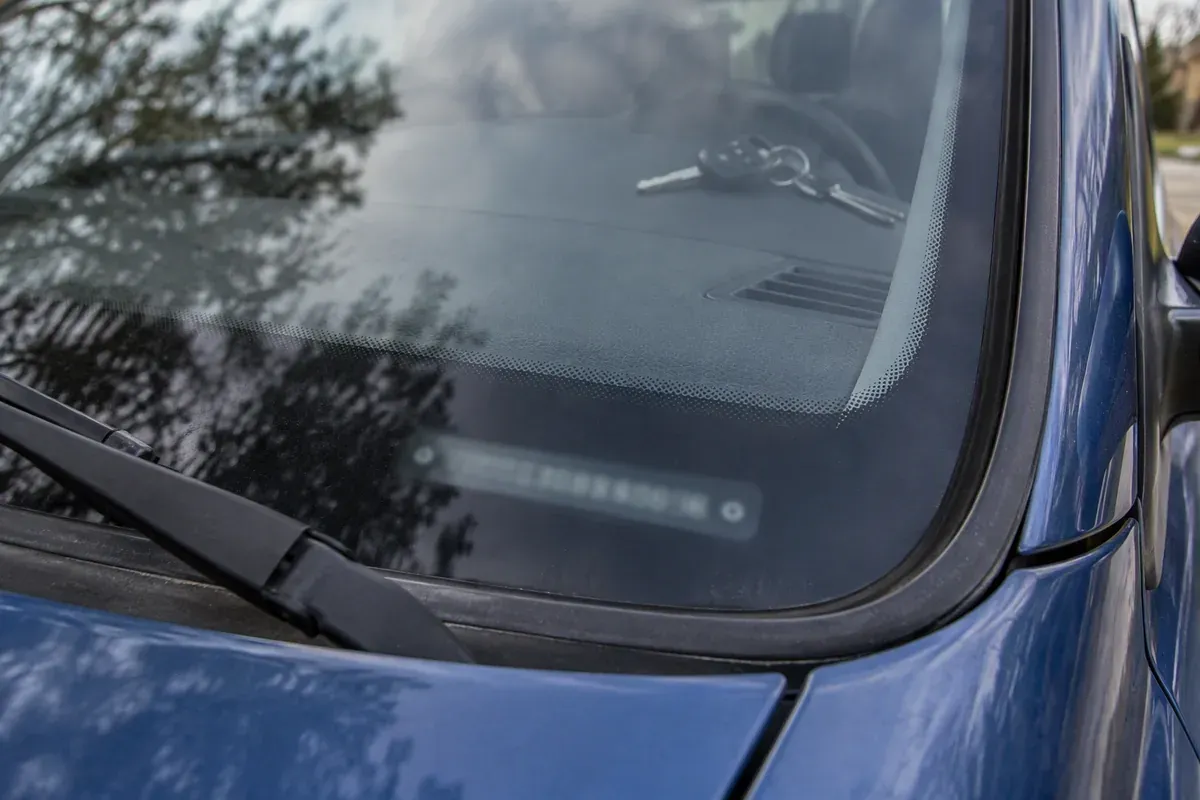
Start with the full VIN and the actual vehicle
A VIN identifies the car. Modern US-market vehicles generally use 17 characters; older or unusual vehicles may need separate identification. Use the real car's complete number, not a sample VIN or only the last characters from an advertisement.
Find identification in documents and the model's factory locations. A windscreen marking and door-jamb label are common examples, not a universal list. Follow manufacturer guidance, compare every character and seek specialist and official identification help if alteration is suspected.
A VIN decoder is not a vehicle-history report
NHTSA vPIC uses manufacturer data to decode information encoded in the VIN. It helps compare model, model year and certain specifications. It does not automatically supply all accidents, current mileage, every option or condition. If results conflict, check original market, model year, manufacturer information and documents instead of choosing the convenient answer.
Use different sources for different questions
NMVTIS is a US vehicle-title information system. Its official report explanation identifies five key indicators: current title state and latest title date, brand history, odometer information, total-loss history and salvage history. Reports are obtained through the listed providers; they are not a complete repair log or a substitute for independent inspection.
Auction platforms and archives show how a car appeared in a particular lot. Copart, IAA and archival services may help where the record is accessible. Verify full VIN, lot number, date and origin of material. A familiar service name does not guarantee a complete archive.
| Information available | What it does not establish | When to use it | |
|---|---|---|---|
| NHTSA vPIC | Manufacturer-based VIN specification | All accidents, mileage, options or repair quality | Identify the version first |
| NMVTIS provider report | Title state/date, brands, odometer, total loss and salvage | Every accident, servicing, current safety or Georgian sale eligibility | Historical statuses before inspection |
| Original auction lot | Date, lot, photos, stated damage and details | Full damage extent or current road safety | Assess original condition and brief the inspector |
| Archive aggregator | Saved records and photos | Archive completeness or independent evidence | When originals are unavailable; record provenance |
| Repair records | Stated work, parts and dates | Installation quality or absence of other faults | Compare original damage and repairs |
| Current inspection | Condition within the agreed scope | All missing history or future service life | Before deciding and agreeing a price |
Check vPIC and NMVTIS in a traceable sequence
In vPIC, enter the full VIN obtained from the seller and checked against documents. A partial VIN may be accepted by the interface, but is insufficient for identifying this particular car. Start without imposing a model year: the page explains that an entered Model Year replaces the year decoded from VIN. Save inputs, outputs, warnings and date. A blank result is missing information, not proof that a component is absent. Resolve conflicts through manufacturer data and documents.
Use the official NMVTIS consumer page to find providers and check product contents and price before buying. A product called “VIN report” does not itself prove NMVTIS access. Match number and report date, record the five indicator groups and caveats, and preserve exact state, brand wording and dates. No paid VIN report was purchased for this guide; perform the final check for the actual car.
Build a contradiction log and inspection brief
Use date → source → event → mileage and units → present-day check. A right-side impact photo directs attention to corresponding structure and suspension; an odometer record needs later readings for comparison; absent repair evidence calls for work records. Separate observed facts, seller explanations and hypotheses. Import and registration eligibility belong to the relevant authority, not a body inspector. A second report from the same underlying source does not resolve an open question independently.
Reconstruct auction records without mixing vehicles or dates
Search the full VIN in available systems. Save source, auction date, lot number, photographs, mileage and units, title wording and stated damage. A VIN may appear in several lots over time: subsequent sales could occur without repair, after partial work or after another incident. Arrange records chronologically.
Compare identification, colour, specification, wheels, interior and damage. A similar model in a photo is not proof of the same car. Request the full available photo set and original link if only selected images are supplied. Compare archive data with the original lot where possible and state when the primary source cannot be opened. A displayed final bid is not evidence of a completed retail sale.
Auction descriptions are not mechanical conclusions
“Primary damage” does not list every defect. Start or movement labels at the auction do not establish current powertrain condition or road-use eligibility. Read the platform's definition for the specific record rather than carrying another service's advertising interpretation across.
Read pre-repair photographs as an inspection plan
Start with the impact zone: outer panels, wheels and suspension, structure, interior or a combination. Review all angles, not one favourable image. Areas behind closed panels may remain unknown. Photos help frame specialist questions but cannot precisely establish geometry or repair cost.
Match original damage with the current car. A previously deformed pillar that now looks straight still needs a repair-method and quality assessment at that location. Request work and replacement-part records and safety-check evidence. “Only a bumper was changed” should agree with all available history.
Airbags, belts and structure
Look for visible deployment, dashboard and belt damage, pillars and chassis rails. An airbag not visible from one angle does not mean it never deployed. Where warranted, inspect today's safety systems and structure. A tidy interior is not evidence of correct restoration.
Water, flood and fire indicators
A flood record or water evidence warrants deeper checks of electronics, cavities and connections. A cleaned interior does not rule out consequences. Conversely, a damp mat or smell alone does not prove historic flooding. Compare records, photos and professional findings. Fire descriptions or visible burning likewise require an assessment of affected systems rather than an assumption that cosmetic repairs removed all risk.
Read title brands in their US jurisdiction
A title is a US ownership document. A brand is a state-applied status such as salvage, junk or flood; definitions and consequences depend on jurisdiction. A record without a visible brand does not establish no prior collision. A brand does not fully describe present repair quality.
California DMV, for example, distinguishes total-loss salvage, revived salvage/junk and non-repairable vehicles. It states that a vehicle issued a non-repairable certificate cannot subsequently be titled or registered as a junk or revived-salvage vehicle for use there. This is California's rule, not an automatic conclusion about Georgian registration. Confirm the actual documents' acceptability for the proposed import and purchase separately.
| What it suggests | What remains to verify | |
|---|---|---|
| No visible brand / “clean” | That status is not shown in this record | Other records, collisions and report coverage |
| Salvage / total loss | Significant historical risk recorded | Cause, photos, state, repair quality and document eligibility |
| Rebuilt / revived | Restoration under the relevant jurisdiction’s rules | What was checked there and current condition |
| Flood | Historical water-exposure risk | Extent and present electronics or corrosion |
| Junk / non-repairable | Special status with potentially severe restrictions | Exact wording, jurisdiction and permitted further actions |
Put mileage readings in chronological order
Order readings by source and date and check whether they use miles or kilometres. Approximately one mile equals 1.609 km. Auction mileage can carry odometer-status or reliability qualifications. No record is not zero mileage, and converting units is not a rollback.
If a later reading is lower after conversion, request explanation and evidence. A recording error, instrument replacement and interference require different assessments. One contradictory line cannot establish exact true mileage. Do not accept the smaller figure as verified while the conflict remains unresolved.
Worked example: an apparent contradiction
This is hypothetical, without a real VIN: an old photo shows 80,000 miles and the current seller states 100,000 km. Using 1.609, the older reading is approximately 128,720 km. Investigate dates, units and the instrument. The discrepancy is not proof of a particular odometer-alteration method and does not describe an actual car or transaction.
Understand differences and gaps between history services
Coverage, underlying sources, update dates, paid sections and VIN matching can differ. One service may hold photos, another title history and another limited servicing records. Two matching aggregator reports can rely on the same original source; agreement is not necessarily independent confirmation.
If nothing is found, conclude only that the checked accessible sources did not return relevant records. Do not say “no accidents”. A deleted lot or closed archive limits evidence. Before paying an intermediary promising a “complete database”, verify the data origin and product coverage.
Turn historical evidence into a present-day decision
Confirm identity, decode specification, investigate title and mileage, then assemble auction chronology and photos. Ask what was damaged, which parts were replaced, what supports the repair and what must now be tested. Compare seller answers with documents and inspection.
Assess price impact through equivalent cars and repair quality, not a fixed salvage discount. SellCar Auto Market offers cars priced for a quick sale, but its Price Filter is neither a VIN check nor a safety guarantee. Publication does not remove the need to collect history and deal directly with the seller.
- Match the history VIN to vehicle and documents.
- Retain sources, dates and mileage units.
- Distinguish title brands from auction labels.
- List missing or contradictory evidence separately.
- Compare original damage with today's independent inspection.
Note.US statuses are explained with their jurisdiction, not imported as Georgian rules. No particular VIN history or actual auction case is reported. Archive access changes; absence of a record does not guarantee absence of an event.
Sources and services
- NHTSA vPIC — official VIN decoder (checked 9 October 2026)
- NMVTIS — report scope and limitations (checked 9 October 2026)
- NMVTIS — consumers and approved provider access (approved research, 9 October 2026)
- California DMV — salvage and non-repairable vehicles (approved research, 9 October 2026)
- California DMV — revived salvage and junk vehicles (approved research, 9 October 2026)
Browse cars priced for a quick sale
Frequently asked questions
No. Decoding identifies specifications; historical events require other sources, whose coverage determines what can be found.
No. They mean no relevant record was found in the checked source. The event may be outside its coverage or inaccessible.
No. It relates to the relevant jurisdiction and does not establish current condition. Check repairs, documents and Georgian procedure eligibility separately.
Not necessarily. They may share a data source. Examine provenance, dates and scope rather than only their conclusions.