
Damaged car buyout in Tbilisi
Selling a damaged car in Tbilisi, Georgia starts with photographs rather than repairs. Send pictures of the damage together with the vehicle details, and we will look at your specific case and give a preliminary reference figure. There is no need to fix anything before you get in touch.
- Valued in its current condition — no repairs, no pre-sale preparation
- We review the case from photos of the damage and the vehicle details
- Running cars and cars that no longer move after a collision are both considered
- Inspection in Tbilisi by arrangement — place and time are agreed with you
- Every car is judged individually rather than by a fixed template
Ready to find out your price?
Free valuation and an expert visit anywhere in Georgia.
Value my damaged car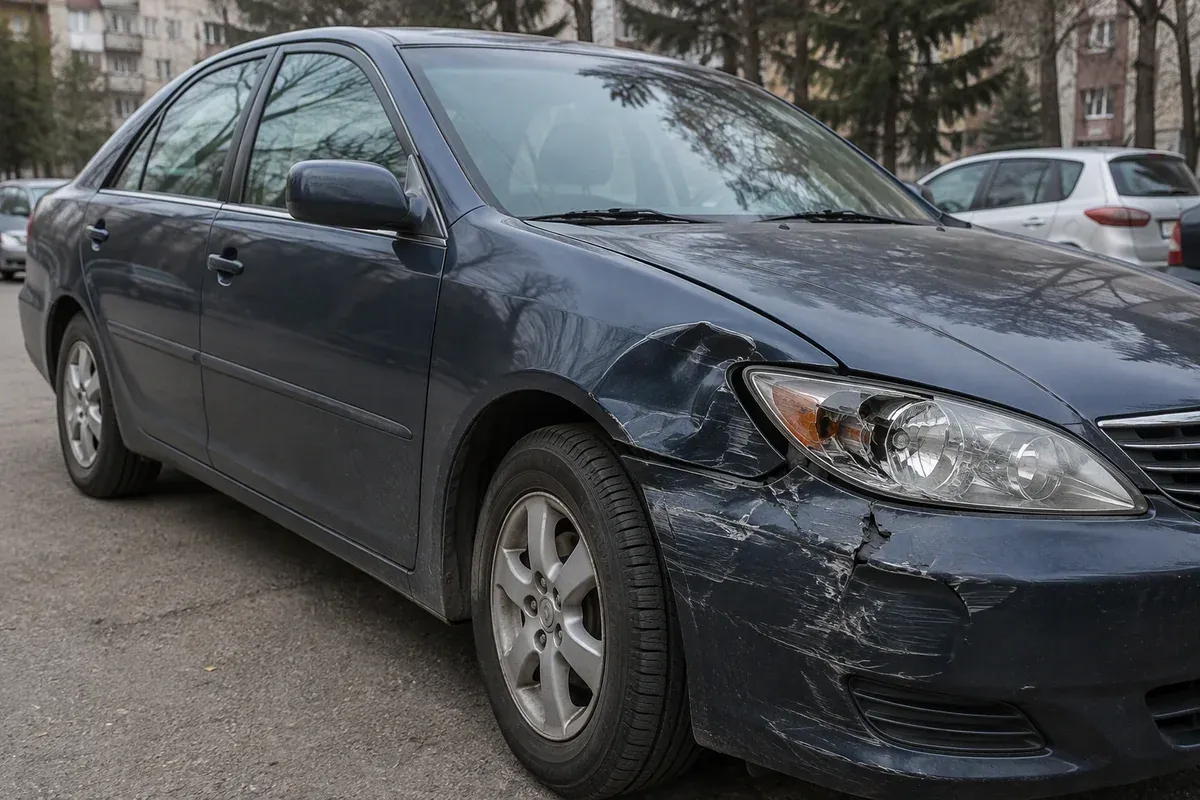
A simple, transparent process
- 01
Describe the car
Make, model, year, mileage, what exactly is damaged and whether the car still moves under its own power.
- 02
Send photographs
General views from all four sides plus close-ups of the damaged areas — they show the real scope of the work.
- 03
Get a preliminary figure
A reference range based on what you sent. It is not a final offer and it commits neither side.
- 04
Inspection and agreement
Place and time of the inspection in Tbilisi are arranged separately; the final price is fixed afterwards.
Which damaged cars we consider
We can look at a car with almost any kind of collision damage, from a dented panel to the aftermath of a serious accident. That is not an automatic yes: the figure depends on the condition of the particular vehicle, and the decision follows a review of your details and an inspection.
The situations owners in Tbilisi come to us with most often:
One local detail matters here. Moving a damaged or non-running car through Tbilisi traffic is awkward and rarely cheap, so the first step is deliberately remote — photographs instead of a trip across town. The car can sit in any district of the city; where it is inspected is agreed around your situation.
- front-end impact — bonnet, bumper, radiator, headlights
- rear-end damage after being hit from behind
- side impact with deformed doors, pillars or sills
- damage to body panels and paintwork
- broken glass and lighting units
- damaged suspension, wheels and rims
- deployed airbags
- a car that no longer drives after the accident
- a vehicle that has been partly repaired already
- a car with a visible collision history
How to sell a damaged car in Tbilisi
The route is short and predictable. The only thing that really matters is that the description of the car is honest — the more accurate it is, the smaller the gap between the preliminary figure and the final price.
Documents are signed and payment is made once the terms are agreed. Until that point nothing binds you: a preliminary valuation does not oblige you to sell.
- send the vehicle details: make, model, year, mileage, engine, transmission
- attach photos of the damage and of the general condition
- receive a preliminary valuation — a reference range
- if it works for you, arrange the inspection in Tbilisi
- discuss the final price and the terms of the deal
- sign the documents and complete the payment
Preliminary valuation of a damaged car from photos
Photographs replace the first visit. They show which zones are affected, whether there are traces of earlier repairs and how far the damage reaches into the structure of the car. This set is the most useful:
A short written description helps just as much: how the accident happened, where the impact landed, whether the engine starts, whether the car drives, and where it is parked now. There is no long questionnaire to fill in — the valuation form is enough.
It is worth being clear about the limits of a remote figure. Photos and a description support a preliminary estimate, but deformation of structural members, knock-on damage to the drivetrain and the quality of earlier repairs only become visible during an inspection. The remote number therefore stays a reference point, not a final price.
- the whole car from all four sides
- close-ups of the damaged area from several angles
- front end and rear end separately
- both flanks of the car
- the interior, if the airbags deployed
- the dashboard showing mileage and warning lights
- wheels and the way the suspension sits
- the registration document, if the plates raise any questions
What affects the value of a damaged car
There is no universal formula and no fixed percentage that gets deducted because a car has been in an accident. The figure comes out of several groups of factors:
Whether the structural shell of the body was touched carries particular weight. Damage to chassis members, pillars, floor and suspension mounting points, along with knock-on effects on cooling, engine or gearbox, moves the price far more than a dented wing: restoring geometry costs more than replacing a panel. This is the logic behind the number, not a technical assessment — the accurate picture appears at the inspection.
- make, model and year of manufacture
- mileage and general condition before the accident
- the extent and the nature of the damage
- whether the structural shell of the body is affected
- whether airbags and other safety systems deployed
- the condition of the engine and gearbox after the impact
- whether the car still drives under its own power
- whether repairs have already been done, and how well
- the documents and the registration status of the car
- market demand for the model and the availability of parts
Is it worth repairing the car before selling it
There is no single answer, and saying never repair anything would simply be untrue. The decision comes down to three numbers: what the repair costs, how long it takes, and the price difference before and after.
A small cosmetic job sometimes widens the pool of private buyers and makes a self-managed sale easier. With serious damage, though, the cost and the timeline often fail to justify themselves: the money spent does not always come back in the price, and the car stands idle the whole time.
Hidden damage is the other factor. Once panels come off, more is frequently found than was visible from outside, and the estimate grows while the work is already under way.
The practical order is to get a preliminary valuation of the current condition first, then compare it with a real repair estimate and with a realistic price for a restored car of that model and year. After that the decision rests on figures instead of impressions. We value the car exactly as it stands today.
The car does not run after the accident
If the car stopped moving because of the collision itself — a damaged engine or radiator, distorted geometry, a deformed suspension — this is exactly the right page. Mention in the request that the car is not running and say where it is: that shapes how the inspection is organised.
If, on the other hand, the body is intact and the car will not start because of a mechanical or electrical fault unrelated to any accident, that scenario belongs on a different page.
When the airbags have deployed
Deployed airbags change the shape of the valuation noticeably. Restoring a passive safety system means more than the airbags themselves: gas generators, belts, sensors, the control module and often trim and dashboard parts as well. The economics differ from an ordinary body repair.
What helps: photos of the interior after deployment, a shot of the dashboard with the warning lights on, and a note about which airbags went off. We draw no conclusions about whether the car is fit for the road — that is for qualified specialists — and each such vehicle is judged on its own.
Repairs already started or finished
A fair share of cars arrive for valuation somewhere in the middle: body work started but unfinished, parts ordered or already fitted, paint applied to some panels only. These cases are considered — what matters is knowing how much has been done and what is still open.
A fully restored car is valued on a different basis than a damaged one. Here the quality of the work, the parts that were used and whether receipts or progress photos survive all come to the front. The more transparent the repair history, the smoother the valuation.
Selling without listing the car yourself
A damaged car can of course be advertised privately; the marketplaces exist. The audience is narrow, though — mostly workshops, traders and people buying for parts. Hence the pattern: fewer replies, a lot of questions about the exact damage, and almost always haggling built around a repair estimate.
Coming straight to a valuation removes the search phase: no explaining the condition to each new caller, no showing the car to several people, no keeping it parked and waiting. In exchange you get one offer instead of several. Which suits you better depends on how much of your time you want to spend on it.
Inspecting a damaged car in Tbilisi
The inspection happens by arrangement: place and time are agreed around your situation, taking into account where the car stands and whether it can move at all. If it is not running, say so in advance so we can discuss inspecting it where it is.
The inspection settles what photographs cannot show: the true extent of the damage, the state of structural members and major units, traces of earlier work. The final price follows, and the decision to go ahead stays with you.
The terms of the inspection are agreed individually. We do not promise free vehicle towing or a fixed arrival time, and we make no claim to an office, a yard or an inspection point in Tbilisi.
Documents and registration status
For your first enquiry, you can choose manual data entry instead of registration certificate photos. If you choose the certificate-based option, the form requires photos of both sides. Documents needed to complete the deal are considered separately. The deal itself requires the vehicle documents and the owner's ID; if the car is not registered to you, proof of authority is needed as well.
A damaged car occasionally adds a wrinkle, for example when paperwork was filed about the incident. The exact procedure depends on the registration status of the vehicle and is checked against the official requirements in force at the time of the deal.
Damaged cars on Ukrainian or Russian plates
In Tbilisi it is not unusual for a damaged car to still be on Ukrainian or Russian registration, or not yet registered in Georgia at all. Such enquiries are considered, but the paperwork depends on the documents and the registration status of the specific vehicle and is clarified case by case.
Selling a damaged car before leaving Georgia
A separate situation: departure is close and the car has still not been repaired after the accident. Compare the potential extra proceeds after repairs with the full estimate, the time before departure and the risk of hidden damage for your particular car; an offer for the vehicle as it stands helps you compare the options.
What keeps it from running into the last day: get the preliminary figure early and remotely, gather the vehicle documents, and state up front where the car is parked and whether it can be driven. That leaves only the inspection and the terms to agree.
Buyout as it stands versus selling after a repair
These are two different routes and neither wins automatically. Selling as the car stands costs no time and no investment, and the price reflects the condition. Repairing first and selling privately can in theory bring more, but it needs money, time and tolerance for uncertainty: estimates tend to grow, and the buyer learns about the accident history anyway.
The sensible way to choose is arithmetic. Compare the preliminary figure for the current condition, a real repair estimate, and the price a restored car of that model and year actually sells for. Subtract repair expenses and related costs from the expected sale price after restoration. Compare the resulting amount with the offer for the vehicle in its current condition. The difference indicates the possible financial benefit of repairing; assess the time involved and the risk of hidden damage separately.
How the deal works
For a damaged car the pivotal stage is confirming the condition. The preliminary figure rests on your photos and description; the inspection checks the facts — the extent of the damage, the state of structural members and units, earlier repairs, whether the car drives.
When the facts match the description, the final price usually lands inside the preliminary range. If the inspection uncovers more than the photos showed, the price is revised and you are free to walk away. Once price and terms are agreed, the documents are signed and the payment is made.
Frequently asked questions
Yes. The valuation is based on the current condition of the car, so there is no need to fix the body or prepare the vehicle before getting in touch.
Yes, that is where the process starts. Send general views of the car and close-ups of the damaged areas together with the vehicle details, and you will get a reference range. The final price is set after the inspection.
We can look at those too, including cars after serious accidents. We cannot guarantee a purchase in advance: the decision follows a review of the details and an inspection.
Yes, such cars are considered. Deployment affects the valuation because restoring a safety system costs more than ordinary body work. Photos of the interior and the dashboard help.
Say so in the request and tell us where the car is. The inspection is then arranged separately, taking into account that the vehicle cannot be driven.
Yes, noticeably. Damage to chassis members, pillars, the floor and suspension mounting points requires restoring the geometry of the body, which weighs more than damage to outer panels.
Yes. What matters is knowing which work was done, which parts were used and what is still unfinished. Photos taken during the repair and any receipts help.
This page is about collision damage, including cars that stopped driving because of the accident. If the car will not run because of a mechanical fault without any collision, see the page on non-running cars.
No. The company makes no claim to an office, a yard or an inspection point in Tbilisi. The place and time of the inspection are agreed individually.
Other services
- Buyout after an accidentWe buy cars after accidents and with damage — from light body damage to serious crash consequences. There is no need to invest in repairs before selling: we value the car in its current condition and offer a fair price.
- Buyout of faulty carsWon't start or won't run? We buy faulty cars anywhere in Georgia. We value it in its current condition — no need to spend on diagnostics and repairs before selling.
- Online valuationFind out the approximate buyout price without leaving home. Send the car's details and photos — we will name a preliminary price for free and with no obligation.
Ready to find out your price?
Free valuation and an expert visit anywhere in Georgia.